

General
Incorporating Dark Mode in Email Design and Marketing
Dark mode email design tips to protect brand colors, keep text readable, handle logo/image inversion, add CSS where supported, and test in major clients.

I’m reviewing how we score subscriber engagement in our email marketing program (newsletters and automated campaigns to an opt-in list), and I want to sanity-check whether our approach is reasonable.
Right now we assign points for actions like opens and link clicks, but I’m not sure what a typical scoring framework looks like or how to weight different behaviors (including recent activity vs. older activity). What are best-practice ways to set up email engagement scoring, and how do you decide point values and thresholds for “highly engaged” vs. “inactive” subscribers?
Hi! A solid “best-practice” engagement scoring model for email marketing usually boils down to two ideas: (1) weight behaviors by how strongly they indicate real intent (clicks and conversions > opens), and (2) weight recency heavily (what they did in the last 7–30 days matters a lot more than 6 months ago). If your model does those two things and you calibrate thresholds against your own list’s send frequency, you’re on the right track.
A practical setup that works well for newsletters + automations:
1) Define the time windows first (because thresholds depend on send cadence)
Pick windows that match how often you mail:
2) Choose event weights (typical relative weighting, not magic numbers)
Because opens are increasingly noisy (privacy features + image prefetching), many teams treat opens as a light signal and clicks as the core engagement metric.
If you only have opens + clicks, a common “sane” rule is: 1 open = 1 point, 1 click = 5 points (or 1 and 3, depending on how click-heavy your content is). The exact numbers matter less than the ratio and the recency weighting.
3) Add recency weighting (simple and effective)
Instead of giving the same points forever, apply a multiplier by age, for example:
4) Normalize by opportunity (optional but often worth it)
People can’t click if they didn’t receive many emails. If your send frequency varies a lot across segments/automations, consider scoring an engagement rate in addition to raw points, e.g.:
This keeps “highly engaged” from just meaning “we emailed them a lot.”
5) Set thresholds using your own distribution (don’t guess)
The best way to pick “highly engaged / warm / inactive” is to score everyone, then look at the score distribution and outcomes (complaints, unsubscribes, conversions, inbox placement trends). A common pattern is:
If you want a very practical “deliverability-friendly” rule of thumb: use clicks for your “engaged” definition when possible, and treat opens as a secondary signal (especially on Apple-heavy audiences).
6) Add a few “negative” signals (recommended)
To protect deliverability and reduce spam-folder risk, you can subtract points or flag subscribers for suppression when they do things like:
7) Validate and tune with a lightweight experiment
After you pick initial weights/thresholds, run a 2–4 week test:
If you tell me roughly (a) how often you send newsletters, (b) how many automated emails a typical subscriber gets per month, and (c) what you want the score to optimize for (deliverability vs. revenue vs. retention), I can suggest a concrete point table + recency decay and a clean set of thresholds that fit your cadence.
Related questions
I’m trying to send a 40,000-recipient email marketing campaign from a new dedicated IP in two days and avoid deliverability issues during IP warm-up.
I’m deciding whether to send email marketing from the same authenticated domain in Kit and GoHighLevel, or use a separate subdomain to protect deliverability.
I’m a new Etsy seller trying to learn Etsy SEO and understand how keywords, titles, tags, and categories work together to get found in search.
I shipped an Etsy order a few days ago, but tracking still shows “label created.” Should I message the customer, and when should I escalate with the carrier?
Related posts
Dark mode email design tips to protect brand colors, keep text readable, handle logo/image inversion, add CSS where supported, and test in major clients.

Unlock high-ROI email marketing opportunities in 2023 with personalization, automation, segmentation, mobile-ready designs and compliant, data-driven customer journeys.
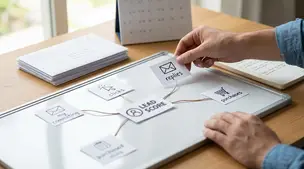
Lead scoring model that blends replies, clicks, and purchases with smart weights, recency, and cutoff tiers, so sales focuses on real intent, not noise today.

Boost email open rates, clicks, conversions, and ROI with smart A/B tests on subject lines, content, CTAs, send times, and personalization that your audience loves.

Segment SaaS onboarding with feature adoption events to personalize in-app guidance, measure activation and time-to-first-value, and reduce early drop-off.
Buying email lists can trigger spam complaints, blocklists, and GDPR/CAN-SPAM issues; protect deliverability with permission-based, opt-in list-building tactics.