
Crafting the Perfect Thank You Mail in Email Marketing


A thank you email is the quickest way to turn a one-time action into the start of a relationship. In email marketing, it’s a short, triggered message sent right after a purchase, signup, or referral that confirms you noticed what they did and sets expectations. The strongest notes are specific, use the customer’s name, echo the action, include essential details like an order summary or next steps, and keep one clear call to action, such as tracking a shipment or leaving a review. Most brands lose the moment by cramming in discounts or sending it before support and fulfillment info is ready, so timing and tone do more than clever subject lines.
Why send a thank-you email in marketing campaigns?
Relationship building vs conversion goals
A thank-you email is not just “polite.” It’s a strategic message that builds trust at a moment when attention is naturally high. The best thank-you emails prioritize relationship building first: confirming the action, recognizing the person, and reducing any anxiety about what happens next. That’s different from a conversion email, which is designed to push a decision.
You can still support revenue goals, but it should feel secondary. A simple line like “Here’s what to expect next” or “Your receipt and order details are below” often does more for long-term retention than a hard sell. When people feel cared for, they are more likely to come back on their own.
Moments that deserve a thank-you message
Thank-you messages work best when they map to real customer milestones. Common moments include a first purchase, a new email signup, a booked demo, a completed onboarding step, or a webinar attendance. They also matter after human moments, like a support conversation, a referral, or a review.
If you’re using automation, keep it grounded in the event itself. A thank-you email should clearly reflect what just happened, not what you wish happened. This is where marketers often lose credibility.
Outcomes to aim for: opens, clicks, replies
Opens matter because a thank-you email is often one of your highest-intent sends. That’s why subject lines should be clear and honest. Clicks matter when you include helpful next steps like tracking an order, accessing a resource, or confirming preferences.
Replies are the underrated metric. A short question can invite real engagement, like “Anything you want us to know before we get started?” or “Was this signup for you or your team?” For many brands, the real win is not an immediate sale. It’s a warmer relationship, cleaner data, and a stronger path to the next campaign.
Thank-you email structure that feels personal and professional
Greeting, gratitude, and specific reference
Start with a real greeting. Use the recipient’s first name when you have it, but only if it’s reliable. “Hi Jamie” is better than “Dear Customer,” and it also feels more natural than forcing a nickname or a broken merge tag.
Then say thank you quickly and specifically. A good thank-you email mentions the exact action: the purchase, the signup, the meeting, or the download. One sentence is enough. “Thanks for booking a demo for Mailscribe” lands better than a generic “Thanks for your interest,” because it proves the email is not a copy-paste blast.
If there’s a key detail that matters, include it right away. For example: order number, appointment time, or what the person will receive next.
Recap and value reinforcement
After the thanks, reinforce value in plain language. This is where you remind the reader why they made the decision without overselling. Keep it short and practical: what they’ll get, when they’ll get it, and how to use it.
A simple structure works well:
- What’s next (shipping, onboarding steps, calendar invite, access link)
- What success looks like (one clear benefit, not a list of claims)
- One primary call to action (track, confirm, start, reply, or set preferences)
If you include a secondary CTA, make it low pressure, like “Set your email preferences,” not “Buy more now.”
Closing line, signature, and contact details
Close like a human. A warm line like “If anything looks off, just reply and we’ll help” reduces friction and increases replies. Sign with a real name and role when possible, even if the message is automated. It signals accountability.
Finally, include the contact details that matter for the situation. For a post-purchase thank-you, that might be support email and hours. For a B2B thank-you, it might be a direct reply path and a scheduling option. The goal is simple: make it easy for the recipient to get help without hunting for it.
Subject lines for thank-you emails that get opened
Clear vs curiosity subject line patterns
Thank-you email subject lines perform best when they match the moment. In most campaigns, clear beats clever because the recipient already knows what just happened and wants confirmation.
Clear patterns work well for post-purchase and post-signup:
- “Thanks for your order, [Name]”
- “You’re in, [Name]. Here’s what’s next”
- “Thanks for booking time with us”
- “Your receipt and next steps”
Curiosity patterns can work when the relationship is warmer, but keep them anchored in the action so they don’t feel like bait:
- “A quick thank-you (and one helpful tip)”
- “One thing to know before you get started”
- “Your next step is ready”
If your brand voice is playful, keep it in the preview text, not at the cost of clarity in the subject line.
Personalization tokens that feel natural
Personalization should read like a normal sentence, not a mail merge. A first name is often enough. You can also personalize with the event itself: product name, meeting title, webinar name, or plan level.
A few practical rules:
- Only use tokens you can trust. If you have messy data, skip the name and write “Thanks for signing up.”
- Don’t over-personalize. “Thanks for buying the Blue Model 3-Pack” can feel creepy unless the customer expects item-level detail.
- Keep punctuation simple. Tokens plus heavy punctuation can look spammy fast.
Preview text is a great place for soft personalization, like “Order #12345 is confirmed” or “Your access link is inside.”
Spam and deliverability red flags to avoid
Thank-you emails are often transactional or triggered, so deliverability matters. Avoid subject lines that look like promotions in disguise.
Common red flags:
- Excessive caps or symbols: “THANK YOU!!!” or “You WON 🎁”
- Money language that dominates: “Free,” “Cash,” “Act now,” “Limited time”
- “Re:” or “Fwd:” unless it’s genuinely a reply in a real thread
- Bait-and-switch phrasing: “Important update” when it’s really a cross-sell
Also watch the body copy. If the subject says “Thank you,” but the first screen is a discount banner, recipients learn to ignore you. A clean, consistent thank-you message protects trust and keeps future campaigns landing where they should: the inbox.
Tone and personalization tips for thank-you email copy
Writing warm and on-brand without sounding generic
A great thank-you email sounds like a person, not a campaign. Aim for warm, simple language and skip filler like “We value you as a customer” unless you can back it up with something specific. If your brand voice is formal, be clear and respectful. If it’s friendly, be friendly without forcing jokes.
A quick way to avoid generic copy is to write the first two lines as if you were sending a one-off note. Then tighten it for scale. Keep sentences short. Use “you” more than “we,” but don’t overdo it.
Also match tone to context. A post-purchase thank-you can be upbeat. A thank-you after a support issue should be calmer and more service-focused.
Referencing specific actions, purchases, or conversations
Specificity is what makes thank-you email copy feel real. Reference the action that triggered the email and one detail that proves you’re paying attention. Examples:
- “Thanks for signing up for Mailscribe. Your account is ready, and you can start with your first template.”
- “Thanks for joining our webinar on deliverability. The recording link is below.”
- “Thanks for taking the time to chat today. Here’s the recap we agreed on.”
For purchases, you don’t need to list every item in the opening line. Instead, confirm the essentials: that the order went through, what happens next, and where to get help. Save item-level detail for the order summary block.
Making the recipient feel seen, not targeted
Personalization should reduce effort for the reader, not make them feel tracked. Focus on helpful personalization:
- Remind them what they’ll receive next and when.
- Offer one relevant next step based on their action.
- Invite a reply with a genuine question.
Avoid “overfitting” the message with too many behavioral callouts. Mentioning that someone “looked at pricing three times” rarely feels good, even if it’s true. If you want to tailor content, keep it subtle: choose a more relevant CTA or resource, rather than spelling out everything you know.
The goal is simple: the recipient should feel recognized, supported, and in control. When your thank-you email copy hits that mark, engagement tends to follow naturally.
When to send a thank-you email after each interaction
Post-purchase and post-signup timing
For post-purchase thank-you emails, send immediately after payment is confirmed. In most ecommerce setups, that means within seconds to a few minutes. This message is doing real work: confirming the order, setting expectations, and giving the customer a clear next step like viewing the order status.
For post-signup thank-you emails, speed matters even more. Send right away while the person still remembers why they signed up. If there’s an activation step (confirming an email, creating a password, starting onboarding), include it in the first screen of the email.
If you operate across regions, be mindful of time zones for any follow-up that is not truly transactional. An instant confirmation is fine at any hour. A “getting started” thank-you follow-up is usually better during local daytime.
After meetings, demos, and sales calls
For B2B meetings, demos, and sales calls, aim to send the thank-you email the same day. If the call ends late, send it the next business morning. The goal is to keep momentum while details are still fresh.
A strong post-demo thank-you email includes:
- A brief recap of what you discussed
- The next step with an owner and a date
- Any promised links or attachments
If you want replies, end with one easy question, like confirmation of priorities or decision timeline.
Post-event and webinar follow-up windows
For events and webinars, send a thank-you email within 1 to 3 hours after the session ends. That window catches people while the topic is still top of mind and makes it easy to access the recording, slides, or resources.
If you have segments, split the follow-up:
- Attendees: “Thanks for joining” plus recording and next step
- Registrants who did not attend: “Sorry we missed you” plus recording and a short summary
A second, lighter follow-up the next day can work if you have something genuinely useful to add, like a short FAQ, key takeaways, or a single recommended next action.
Thank-you email templates marketers can adapt quickly
Post-purchase thank-you email template
Subject: Thanks for your order, {{first_name}}
Hi {{first_name}},
Thanks for your purchase. We’ve received your order {{order_number}}.
What happens next:
- We’re preparing your order now.
- You’ll get a shipping confirmation with tracking as soon as it goes out.
In the meantime, you can review your order details here: {{order_status_link}}
Need help or want to update something? Just reply to this email and our team will help.
Thanks again,
{{sender_name}}
{{company_name}}
{{support_email}} | {{support_hours}}
Post-demo or meeting thank-you email template
Subject: Thanks for your time today, {{first_name}}
Hi {{first_name}},
Thanks for meeting with me today. I appreciate you walking through {{topic_or_goal}}.
Quick recap:
- Current situation: {{current_state_note}}
- Priority outcome: {{priority_outcome}}
- Key question to answer next: {{key_question}}
Next step: {{next_step}} by {{date_or_day}}.
Here’s the resource we mentioned: {{link_or_attachment}}
If I missed anything important, reply here and I’ll update the plan.
Best,
{{sender_name}}
{{title}} | {{company_name}}
{{phone_optional}} | {{calendar_link_optional}}
Re-engagement thank-you email template
Subject: Thanks for being with us, {{first_name}}
Hi {{first_name}},
Thanks for being part of {{company_name}}. If it’s been a while since you last checked in, I wanted to send a quick note and make this useful.
What would help most right now?
A) {{option_1}}
B) {{option_2}}
C) {{option_3}}
You can click one here: {{preference_link}}
Or just reply with A, B, or C.
Either way, thanks again for staying connected,
{{sender_name}}
{{company_name}}
{{unsubscribe_or_preferences_note}}
Common thank-you email mistakes that hurt engagement
Over-selling right after saying thanks
The fastest way to drain trust is to say “thanks” and immediately push another sale. A small, relevant next step is fine. A full promo banner, countdown timer, and three cross-sells usually are not.
If you want to include an offer, keep it clearly secondary. Put the thank-you, confirmation, and next steps first. Then add a single, optional CTA that genuinely fits the moment, like “Add order protection,” “Book onboarding,” or “Browse getting started tips.” The reader should never feel tricked into opening a thank-you email that is really a discount email.
Vague language and empty compliments
Generic lines like “We appreciate you” can work, but only when the rest of the email is concrete. Engagement drops when the message is all emotion and no information.
Replace vague praise with specifics:
- Name the action: purchase, signup, meeting, referral, review.
- Confirm what is true: order received, seat saved, account created.
- Share what happens next: timelines, links, support path.
Even one clear detail, like an order number or a demo recap, makes the email feel real and reduces “Why am I getting this?” confusion.
Accessibility and localization slip-ups
Thank-you emails often get templated and forgotten, which is how accessibility issues creep in. Common slip-ups include low-contrast text, tiny font sizes, button-only CTAs with no descriptive link text, and images that carry the meaning without helpful alt text.
Localization problems also hurt trust. If you send globally, avoid date formats that can be read two ways, and be careful with time zones for meetings and events. Currency, shipping expectations, and support hours should match the recipient’s region when possible. If you cannot localize deeply, keep copy neutral and focus on clear next steps.
A/B tests to improve subject lines, CTAs, and content blocks
A/B testing a thank-you email is worth it because these messages tend to have high visibility. Keep tests small and focused so you learn something you can reuse.
Good tests to run:
- Subject line: “Thanks for your order” vs “Order confirmed”
- CTA language: “View order status” vs “Track your package”
- Content order: recap first vs next steps first
- Reply prompt: include one question vs no question
- Social proof block: present vs removed
Test one change at a time, and measure more than clicks. For thank-you emails, replies, support tickets, and repeat visits often tell the real story.
Related posts
Keep reading
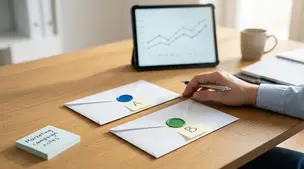
The Importance of A/B Testing on Email Marketing
Boost email open rates, clicks, conversions, and ROI with smart A/B tests on subject lines, content, CTAs, send times, and personalization that your audience loves.

Email Marketing for SaaS Companies: A Comprehensive Guide
Email marketing for SaaS companies: build onboarding, trial-to-paid and retention flows with segmentation, automation, and deliverability basics to cut churn.

Empathy in Email Marketing: The Key Ingredient for Success
Boost email open rates and customer loyalty with empathetic, personalized email marketing that speaks to subscriber pain points, emotions, and real needs.
Building an Effective Email Marketing Strategy
Boost opens, clicks, and revenue with a friendly email marketing strategy focused on list building, segmentation, personalization, automation, and A/B testing.

How To Set Up BIMI So Your Logo Shows In Supporting Inboxes
Set up BIMI with DMARC enforcement, a compliant SVG logo, DNS TXT record, and VMC/CMC options, plus quick checks to fix common display issues in Gmail or Yahoo.

How to Direct Your Newsletter Subscribers to Sales
Convert newsletter subscribers to sales with welcome flows, segmented offers, clear CTAs, and landing pages that track clicks, build trust, and drive purchases.